The roofing industry has a reputation for being one of the last trades to adopt technology. For years, measuring a roof meant climbing a ladder with a tape measure. Creating an estimate meant sitting at a kitchen table with a calculator. Scheduling meant a whiteboard in the office.
That's changing fast. Artificial intelligence and related technologies are reshaping how roofing contractors measure, sell, build, and manage their businesses. Here's what's happening right now in 2026, what's actually useful (vs. hype), and how it affects your business.
Satellite Roof Measurements
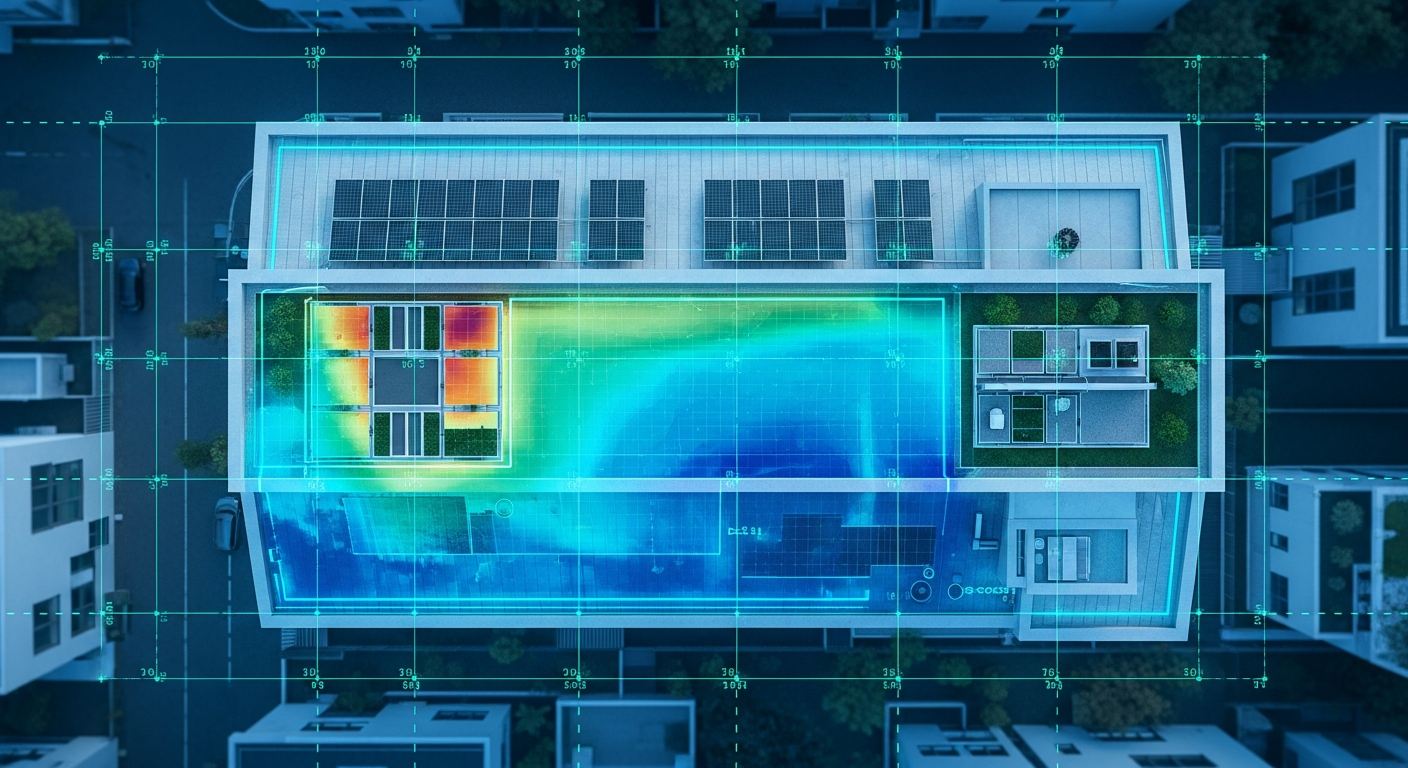
This is the most mature and immediately useful AI application in roofing today. Instead of sending a technician to a property with a measuring wheel and pitch gauge, you enter an address and AI analyzes satellite imagery to produce a complete roof measurement report.
How it works:
- High-resolution satellite imagery is captured by commercial satellite providers (resolution down to 30cm per pixel)
- AI models identify the roof boundaries, edges, ridges, hips, valleys, and penetrations
- The software calculates area, pitch, facet dimensions, and total squares
- A complete report generates with measurements, 3D visualization, and material quantities
What's possible today:
- Full roof measurement reports in under 60 seconds
- Accuracy of approximately 95% for total roof area
- Pitch detection from shadow analysis and stereo imagery
- Material quantity calculations with adjustable waste factors
- Reports available for virtually any residential address in the US
Real business impact:
Contractors using satellite measurement tools report closing deals faster because they can present accurate quotes during the first conversation with a homeowner. There's no "I'll measure the roof and get back to you" delay. One mid-size roofing company in Texas reported a 34% increase in close rate after switching to instant satellite reports because they could present pricing before the homeowner had time to call competitors.
RoofTap provides instant satellite roof reports for $9.95 per address or free with any subscription plan. The reports integrate directly with the estimate and CRM system, so there's no manual data entry between measurement and quote.
AI Photo Analysis for Damage Detection
This is the next frontier in roofing AI. Instead of relying solely on a trained inspector's eye to spot hail damage, missing shingles, or deteriorating flashing, AI can analyze drone or smartphone photos to identify and classify roof damage.
Current capabilities:
- Hail damage detection: AI can identify hail impact marks on shingles from drone photos, counting individual impacts and estimating damage severity
- Missing/damaged shingle identification: Pattern recognition spots gaps, lifted edges, curling, and missing granules
- Flashing and penetration analysis: AI flags areas around chimneys, vents, and skylights that show signs of deterioration
- Vegetation and debris detection: Identifies moss growth, debris accumulation, and tree damage
- Wear assessment: Estimates overall roof condition and remaining useful life based on visible wear patterns
Where it's actually useful:
- Insurance inspections: Documenting damage for insurance claims with AI-identified damage points speeds up the claims process and provides objective evidence
- Pre-purchase inspections: Home buyers and inspectors can get a preliminary roof condition assessment from drone photos before a full inspection
- Portfolio assessment: Property managers with dozens or hundreds of properties can prioritize roof maintenance by scanning all properties from the air
Limitations to be aware of:
AI photo analysis is not a replacement for a qualified roof inspector. It can't detect problems hidden beneath the surface - underlayment failure, deck rot, improper nailing patterns, or moisture infiltration that hasn't yet manifested as visible damage. It's a screening tool, not a diagnostic tool.
The accuracy also depends heavily on photo quality. Drone photos taken at the right altitude with the right camera produce good results. Smartphone photos taken from the ground produce unreliable results.
Automated Lead Intake and Qualification
AI is changing how roofing companies handle inbound leads, and this is one of the areas with the clearest ROI.
AI phone answering:
Several platforms now offer AI phone answering for service businesses. When a homeowner calls and no one answers, an AI assistant picks up, gathers the caller's information, understands their needs ("I think I have a leak" vs. "I need a full roof replacement"), and books an appointment or routes the lead to the right person.
This matters because roofing is a business where the phone rings at unpredictable times - often when your whole team is on a roof. Studies consistently show that 80% of callers who reach voicemail don't leave a message, and 60% won't call back. AI phone answering captures those leads that would otherwise be lost.
Chatbots and web intake:
AI-powered chat on your website can qualify leads 24/7. A homeowner visits your site at 10 PM, types "my roof is leaking," and the AI gathers their address, describes the problem, captures photos if available, and schedules an inspection. That lead is waiting in your CRM when you arrive at the office the next morning.
Lead scoring:
AI can analyze incoming leads and score them based on likelihood to convert. Factors like property value, roof age (estimated from satellite imagery), recent weather events in the area, and the homeowner's stated urgency help prioritize your follow-up. A homeowner with a 25-year-old roof in a zip code that just experienced a hailstorm is a hotter lead than someone casually asking about prices.
Digital Estimates and Proposals
The days of handwriting estimates on carbon copy forms are ending. AI-powered estimation tools can generate professional proposals in minutes by combining roof measurements with material pricing and labor rates.
How modern estimating works:
- Satellite report provides roof measurements
- Select material type and grade
- System calculates material quantities with waste factor
- Labor costs calculate based on your rates and the roof complexity
- Professional proposal generates with Good/Better/Best options
- Homeowner receives the proposal digitally and can approve with an e-signature
The business advantage:
Presenting a professional, itemized digital estimate on a tablet during a sales visit projects competence and builds trust. It also enables the Good/Better/Best selling technique - showing three options at different price points, which statistically leads homeowners to choose the middle or higher option rather than the cheapest.
RoofTap's estimation system ties directly to satellite roof reports. Generate a report, tap "Create Estimate," select your material and options, and a complete proposal is ready. The homeowner can approve it on your tablet or via a link sent to their phone.
Online Payments and Financing
Collecting payment has traditionally been one of the most friction-filled parts of the roofing business. AI isn't directly involved here, but the technology ecosystem around roofing payments has improved dramatically.
What's available now:
- Credit card payments in the field: Tap to Pay on your phone or a mobile card reader
- Online payment links: Text or email a payment link after job completion
- Progress billing: Collect deposits, progress payments, and final payments through a single platform
- Integrated financing: Offer homeowners monthly payment plans at the point of sale, with approval in minutes
- Automated payment reminders: System sends follow-ups on outstanding invoices so you don't have to chase payments
The impact on cash flow is significant. Contractors who offer digital payment options and on-site card acceptance report getting paid an average of 11 days faster than those relying on checks and manual invoicing.
Scheduling and Crew Management
AI-assisted scheduling is still early in roofing compared to industries like HVAC (where ServiceTitan and others have sophisticated dispatch optimization), but it's developing rapidly.
Current capabilities:
- Weather-aware scheduling: Automatically flag or reschedule jobs when rain is forecast
- Crew skill matching: Assign crews based on job type (metal vs. shingle vs. tile) and complexity
- Route optimization: Plan daily job sequences to minimize drive time between sites
- Material coordination: Sync material delivery dates with crew schedules so materials arrive on time
What's Coming Next
Drone automation:
Fully autonomous drone inspections where you launch a drone, it follows a pre-programmed flight path around the property, captures standardized photos, and produces an AI-analyzed condition report without human piloting.
Real-time material pricing:
AI systems that pull live pricing from distributors and adjust your estimates based on current material costs, availability, and delivery timelines.
Predictive maintenance:
Using satellite imagery captured over time to track roof degradation and predict when a roof will need replacement, enabling proactive outreach to homeowners before they experience problems.
How to Start Adopting AI in Your Roofing Business
You don't need to adopt everything at once. Here's a practical sequence:
- Start with satellite measurements. The ROI is immediate and obvious. Faster quotes, lower measurement costs, higher close rates.
- Add digital estimates and payments. Professional proposals and easy payment collection improve both your close rate and your cash flow.
- Implement automated lead intake. AI phone answering and web chat capture leads you're currently losing.
- Explore damage detection. As you get comfortable with the technology, add drone-based AI inspections to your toolkit.
RoofTap combines satellite measurements, CRM, estimates, scheduling, and payments into a single platform built specifically for roofing contractors. It's designed to be the starting point for technology adoption - simple enough to use on day one, powerful enough to grow with your business.
See how RoofTap uses AI for roofing or try a free roof report to see satellite measurements in action.