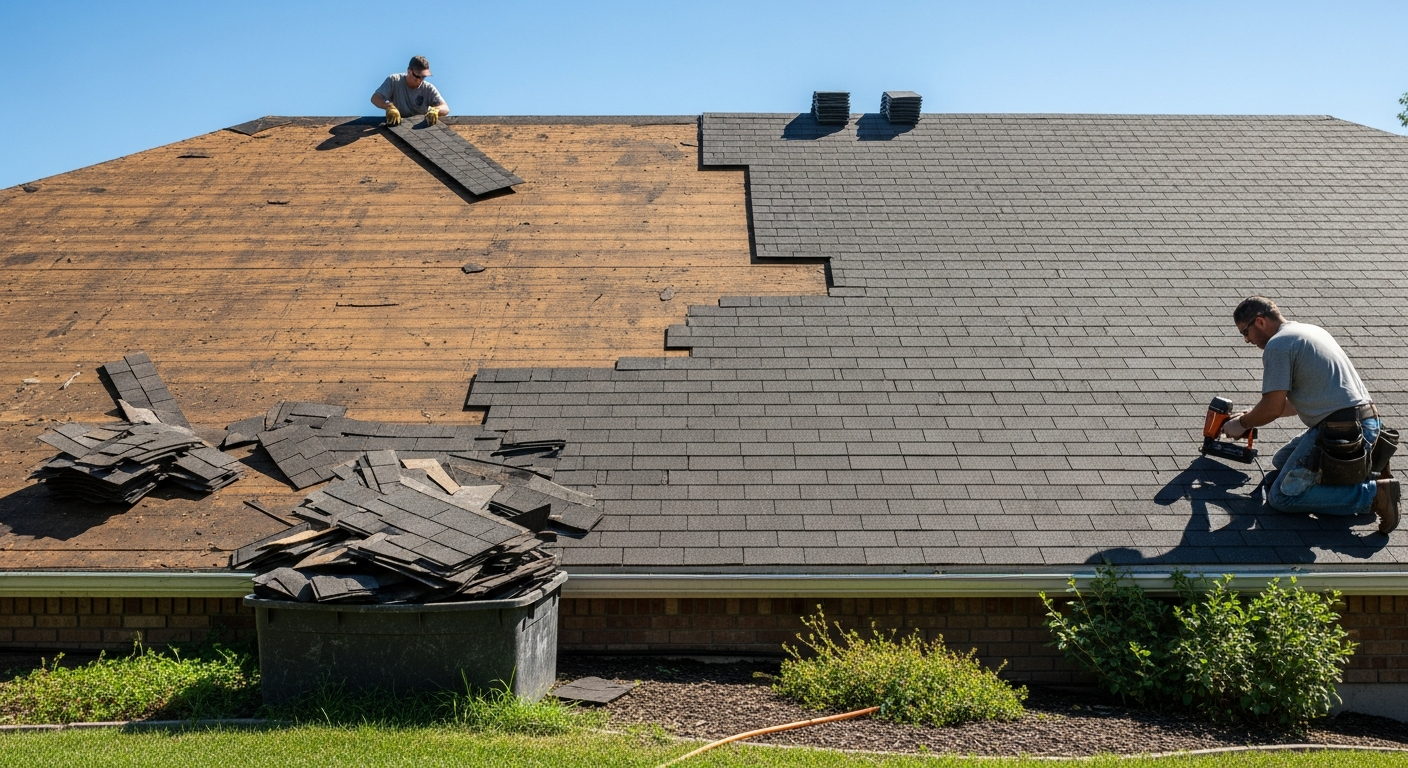
Replacing a roof is one of the biggest home improvement investments you'll make. The average residential roof replacement in 2026 costs between $8,000 and $25,000, with most homeowners landing somewhere around $10,000-$15,000 for a standard asphalt shingle roof on a typical single-story home.
But "average" doesn't help much when you need to budget for your specific roof. The actual cost depends on your roof size, the material you choose, your roof's complexity, your location, and several other factors. Let's break it all down.
Cost by Roofing Material
Material is the single biggest variable in your roof replacement cost. Here's what each major roofing material costs in 2026, including installation:
| Material | Cost per Sq Ft (Installed) | Cost for 2,000 Sq Ft Roof | Lifespan |
|---|---|---|---|
| 3-Tab Asphalt Shingles | $3-5 | $6,000-10,000 | 15-20 years |
| Architectural Asphalt Shingles | $4-8 | $8,000-16,000 | 25-30 years |
| Metal (Exposed Fastener) | $6-10 | $12,000-20,000 | 40-60 years |
| Standing Seam Metal | $10-18 | $20,000-36,000 | 50-75 years |
| Clay Tile | $9-12 | $18,000-24,000 | 50-100 years |
| Concrete Tile | $7-10 | $14,000-20,000 | 40-75 years |
| Slate | $15-30 | $30,000-60,000 | 75-150 years |
| Synthetic Slate/Shake | $8-14 | $16,000-28,000 | 30-50 years |
| Cedar Shake | $8-12 | $16,000-24,000 | 20-40 years |
Asphalt Shingles: The Most Common Choice
About 75% of American homes have asphalt shingle roofs, and for good reason - they offer the best balance of cost, appearance, and durability.
3-tab shingles ($3-5/sq ft) are the economy option. They lie flat, have a uniform appearance, and last 15-20 years. They're increasingly uncommon on new installations because architectural shingles aren't much more expensive and last significantly longer.
Architectural shingles ($4-8/sq ft) are the standard choice in 2026. They have a dimensional, layered appearance that looks more like slate or wood shake. They're thicker, more wind-resistant (rated for 110-130 mph winds), and last 25-30 years. If you're replacing an asphalt roof, architectural shingles are almost always the smart choice.
Premium/designer shingles ($7-12/sq ft) from brands like GAF Grand Canyon or CertainTeed Grand Manor mimic the look of slate or cedar shake. They carry 50-year warranties and offer the most curb appeal of any asphalt option.
Metal Roofing: Growing Fast
Metal roofing has surged in popularity, now accounting for roughly 18% of the residential roofing market. The two main categories:
Exposed fastener metal ($6-10/sq ft) uses corrugated or ribbed panels with visible screws. It's common in rural areas and on barns, workshops, and farmhouses. It's affordable and lasts 40-60 years, but the exposed fasteners can be a maintenance point over time.
Standing seam metal ($10-18/sq ft) uses concealed fasteners and interlocking panels for a clean, modern look. It's the premium metal option - extremely durable (50-75 years), energy efficient, and virtually maintenance-free. The higher cost is offset by longevity; a standing seam roof installed in 2026 might be the last roof you ever buy.
Premium Materials: Tile and Slate
Clay tile ($9-12/sq ft) is iconic in Mediterranean and Southwestern architecture. It's beautiful, fireproof, and can last 100 years. But it's heavy - your roof structure may need reinforcement - and fragile if walked on.
Slate ($15-30/sq ft) is the luxury option. A properly installed slate roof will outlast the house itself. But the cost is prohibitive for most homeowners, and finding qualified slate installers is increasingly difficult.
Synthetic alternatives ($8-14/sq ft) like synthetic slate and composite shake offer the appearance of premium materials at a lower cost and weight. They've improved dramatically in recent years and are worth considering if you love the look of slate or shake but not the price tag.
Factors That Affect Your Specific Cost
1. Roof Size
This is obvious but worth stating: a bigger roof costs more. Roofing is typically priced per "square" (100 square feet). A 2,000 square foot roof is 20 squares.
Don't guess your roof size. The actual roof area is larger than your home's footprint because of slope. A house with a 1,500 square foot footprint might have a 2,000+ square foot roof depending on pitch. You can get an accurate measurement from a satellite roof report - many roofing contractors offer these for free.
2. Roof Pitch (Slope)
Steeper roofs cost more because:
- They require more material (more surface area)
- They take longer to install (slower, more careful work)
- They require additional safety equipment
- They're harder to access
A low-slope roof (4/12 pitch) might add 0% to your base cost. A steep roof (12/12 pitch) can add 25-50% because of the additional labor and safety requirements.
3. Roof Complexity
A simple gable roof (two flat planes meeting at a ridge) is the easiest and cheapest to roof. Every additional feature adds cost:
- Valleys: Where two roof planes meet and slope inward. Require extra flashing and careful waterproofing.
- Hips: Where two roof planes meet at an outside angle. More cutting and waste.
- Dormers: Mini-roofs protruding from the main roof. Lots of additional flashing and detail work.
- Skylights: Each skylight needs to be flashed carefully. Budget $200-500 extra per skylight.
- Chimneys: Flashing around chimneys is one of the most common leak points. Budget $300-800 per chimney for proper step and counter flashing.
- Penetrations: Vent pipes, exhaust fans, and other roof penetrations each need individual flashing.
A complex roof with multiple hips, valleys, dormers, and penetrations can cost 30-50% more than a simple roof of the same square footage.
4. Tear-Off vs. Overlay
Tear-off means removing the existing roof down to the deck before installing the new roof. This is the preferred method and is required in many jurisdictions if there are already two layers of shingles.
Overlay means installing new shingles directly over the existing layer. It's cheaper ($1-2/sq ft savings) but has drawbacks: you can't inspect the deck for damage, it adds weight, it may void the shingle warranty, and it can look lumpy.
Most roofing professionals recommend tear-off. Budget $1-2 per square foot for tear-off and disposal. For a 2,000 sq ft roof, that's $2,000-4,000 in additional cost.
5. Deck Repairs
Once the old roof is removed, the underlying deck (typically plywood or OSB) may have damage. Rotted or water-damaged decking must be replaced before the new roof goes on. Budget $70-100 per sheet of plywood replaced, plus labor. Most roofs need a few sheets replaced; badly damaged roofs might need significant deck work.
6. Location
Roofing costs vary significantly by region:
- Southeast: Generally lower costs due to lower labor rates and mild climate
- Northeast: Higher costs due to higher labor rates, steeper roofs (for snow), and more complex building codes
- West Coast: Highest costs due to labor rates, building codes, and high demand
- Midwest: Moderate costs, but storm damage drives seasonal demand spikes
Urban areas generally cost 10-20% more than rural areas due to higher labor costs, permitting fees, and disposal costs.
7. Time of Year
Roofing has a seasonal pricing cycle:
- Late spring/summer: Peak season. Highest demand, highest prices, longest wait times.
- Fall: Still busy but slightly less demand. Good time to schedule.
- Winter: Lowest prices (in northern climates). But installation quality can be affected by cold temperatures, and some materials shouldn't be installed below 40°F.
- After a major storm: Prices spike due to demand. If you can wait, you'll get better pricing once the storm-chasing crews leave town.
How to Get an Accurate Estimate
Step 1: Know your roof size
Get a satellite roof measurement before talking to contractors. This gives you the actual roof area (not just the building footprint) so you can evaluate quotes on an apples-to-apples basis. Many contractors offer free satellite reports, or you can get one from tools like RoofTap's free roof report.
Step 2: Get multiple quotes
Get at least three written quotes from licensed, insured roofing contractors. Make sure each quote specifies:
- Material type and manufacturer
- Roof area being covered
- Whether tear-off is included
- Underlayment type
- Warranty (manufacturer and workmanship)
- Timeline
- Payment terms
Step 3: Compare apples to apples
The cheapest quote isn't always the best deal. Look at what's included. A quote that's $2,000 cheaper but uses 15-lb felt underlayment instead of synthetic, skips drip edge, or offers a 1-year workmanship warranty is actually more expensive in the long run.
Step 4: Check credentials
- State contractor license (required in most states)
- General liability insurance ($1M minimum)
- Workers' compensation insurance
- Manufacturer certifications (GAF Master Elite, CertainTeed SELECT, Owens Corning Preferred)
Manufacturer certifications matter because they enable extended warranty coverage. A GAF Master Elite contractor can offer a 50-year non-prorated warranty that a non-certified installer cannot.
Financing Options
If $10,000-$25,000 isn't in your immediate budget, several financing options exist:
- Contractor financing: Many roofing companies offer 12-24 month payment plans through third-party lenders
- Home equity loan/HELOC: Lower interest rates but uses your home as collateral
- Personal loan: Higher interest but no collateral required
- Insurance claim: If your roof was damaged by a covered event (storm, hail, fallen tree), your homeowner's insurance may cover most of the replacement cost minus your deductible
- Credit card: Only if you can pay it off quickly; interest rates make this expensive
The Bottom Line
A roof replacement is a significant investment, but it's not optional - a failing roof leads to far more expensive water damage, mold, and structural problems. The best approach is to understand your costs early, get accurate measurements, collect multiple quotes, and choose a contractor based on value, not just price.
Start by getting a free satellite roof report for your property. It takes 60 seconds and gives you the roof area, pitch, and preliminary cost range you need to budget accurately and evaluate contractor quotes.