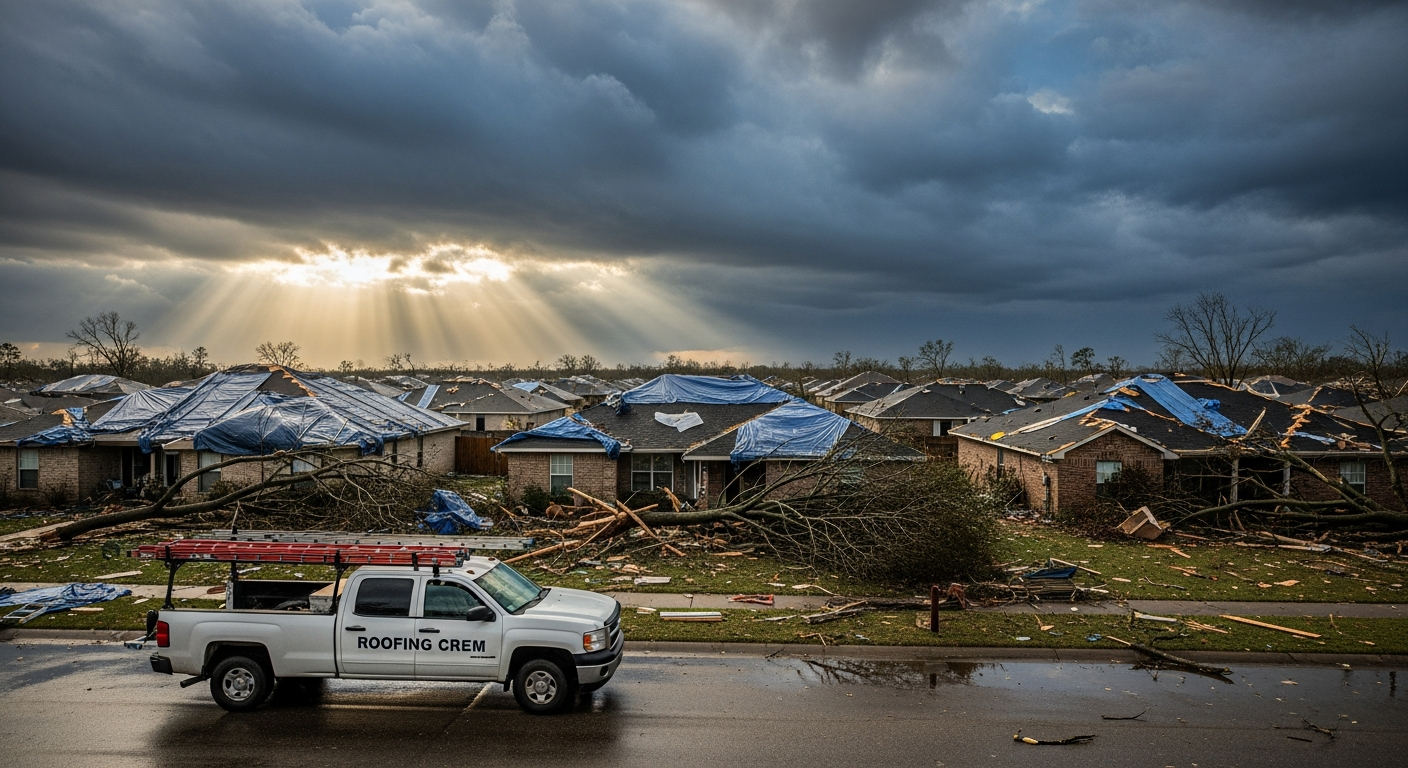
A major storm can generate more roofing leads in 48 hours than your company normally sees in 6 months. Hailstorms, hurricanes, tornadoes, and severe wind events create sudden, massive demand for roof inspections and replacements. The contractors who scale up fastest capture the most business.
But scaling after a storm isn't just about knocking on doors. It's about having systems in place to handle a flood of leads, convert them quickly, schedule efficiently, and collect payment without your operations falling apart.
This is a practical playbook for storm response, written for roofing contractors who want to be ready when the next storm hits.
Phase 1: The First 48 Hours - Lead Capture
The first 48 hours after a major storm are the most critical window. Homeowners are inspecting their properties, filing insurance claims, and searching for contractors. If you're not capturing leads during this window, your competitors are.
Immediate actions:
1. Activate your website and social media
Update your homepage with a storm response message: "Recent storm damage? Get a free roof inspection." Post on Facebook, Instagram, and Nextdoor within hours of the storm. Share photos of storm damage in the area (not specific customer properties without permission).
2. Email and text your existing customer base
Send a message to every past customer in the affected area: "We hope your home wasn't affected by yesterday's storm. If you'd like us to inspect your roof, reply to schedule a free inspection." Past customers trust you and will respond at much higher rates than cold leads.
3. Set up a dedicated storm response landing page
Create a simple page where homeowners can enter their address to get a free satellite roof report and schedule an inspection. This serves double duty: you capture their information AND they get immediate value (seeing their roof measurements and any visible damage indicators).
4. Prepare for phone volume
Your phone is going to ring. A lot. If you don't have the capacity to answer every call, set up an AI answering service or overflow call routing so no lead goes to voicemail. Remember: 80% of callers who reach voicemail won't leave a message.
Lead sources after a storm:
| Source | Lead Quality | Volume | Cost |
|---|---|---|---|
| Past customer referrals | Very high | Medium | Free |
| Inbound calls (organic) | High | High | Free |
| Website/free roof reports | High | Medium-High | Free |
| Facebook/social media | Medium-High | High | Free-Low |
| Google Ads (storm keywords) | High | High | $15-40/click |
| Door knocking | Medium | Very High | Labor only |
| Angi/HomeAdvisor | Medium | Medium | $30-80/lead |
The door-knocking debate
Door-to-door canvassing after storms is common in the roofing industry, but it's controversial. Some homeowners appreciate the proactive outreach. Others find it predatory, especially when out-of-town "storm chasers" flood their neighborhood.
If you're a local contractor with a reputation to protect, here's the approach that works best:
- Knock in neighborhoods where you've already done work. "Hi, I'm [Name] from [Company]. We did your neighbor's roof at [address]. We noticed the hail damage in the area and wanted to offer a free inspection."
- Leave a professional door hanger (not a flyer) with your company info, license number, insurance verification, and a QR code linking to a free roof report.
- Never pressure homeowners. The hard sell creates complaints, bad reviews, and regulatory problems.
- Focus on your home market. Flying to another state to chase storms carries risks (unfamiliar codes, no local reputation, customer service challenges).
Phase 2: Days 3-14 - Rapid Assessment and Estimation
By day 3, you should have a backlog of leads. Now you need to assess their roofs and get estimates out fast, because every day you delay is a day the homeowner might sign with another contractor.
Use satellite reports for triage
Here's where satellite roof measurement tools transform your storm response workflow. Instead of driving to every property to measure the roof before preparing an estimate, you can:
- Pull a satellite report for every lead address in your pipeline
- Generate preliminary estimates with material quantities before visiting the property
- Prioritize site visits for the largest or most promising jobs
- Arrive at appointments with a nearly complete estimate, not a blank clipboard
With RoofTap, you can run bulk satellite reports on your entire lead list. Each report costs $9.95 (or is free with a subscription), generates in under 60 seconds, and feeds directly into the estimate builder. A team that previously prepared 5 estimates per day can prepare 20+ because the measurement step is eliminated.
Streamline your inspection process
For storm damage specifically, your site inspection should be focused and efficient:
What you're looking for:
- Hail impact marks on shingles (check in multiple areas, not just one spot)
- Wind-lifted or missing shingles
- Damaged flashing around penetrations
- Cracked or broken ridge cap
- Gutter dents and damage (correlates with roof damage severity)
- Damage to vents, skylights, and other roof accessories
What you're documenting:
- Wide-angle photos of all roof slopes
- Close-up photos of every damage point
- Measurements or reference markers for scale
- GPS-tagged photos (most smartphones do this automatically)
- Written notes on damage type and severity
Use a standardized inspection form so every inspection captures the same data regardless of who performs it. This is especially important if you're hiring temporary inspectors to handle volume.
Estimate speed matters
After a storm, the contractor who gets an estimate in front of the homeowner first has a significant advantage. Here's the target timeline:
- Day 0: Lead captured
- Day 1: Satellite report generated, preliminary estimate prepared
- Day 2-3: Site inspection completed, estimate finalized
- Day 3-4: Estimate presented to homeowner
Compare that to the traditional process:
- Day 0: Lead captured
- Day 3-5: Site visit scheduled and completed
- Day 5-7: Measurements taken, estimate prepared
- Day 7-10: Estimate presented
The contractor using satellite reports and digital estimates is presenting a week earlier. In a competitive storm market, that's the difference between winning and losing the job.
Phase 3: Weeks 2-8 - Scaling Production
You've captured leads and sent estimates. Now jobs are starting to close, and you need to actually do the work. This is where many roofing companies stumble after storms - they sell more work than they can install.
Crew management
If you're subcontracting or hiring temporary crews:
- Vet subcontractors before the storm season, not during the chaos
- Verify insurance, licensing, and workers' comp for every crew
- Use a consistent quality checklist for every job regardless of which crew performs it
- Schedule a quality inspection after every job before sending the final invoice
Scheduling for volume:
- Group jobs geographically to minimize drive time between sites
- Schedule material deliveries 1-2 days before the crew arrives
- Build buffer days into your schedule for weather delays
- Use a digital scheduling system so crews can see their assignments in real time
RoofTap's scheduling system lets you assign crews to jobs, view daily and weekly calendars, and push schedule changes to crew members' phones instantly. When you're running 3-5 crews simultaneously across a metro area, a shared whiteboard doesn't cut it.
Material procurement
Major storms create supply chain pressure. Every roofer in your area is ordering the same materials at the same time. Plan ahead:
- Pre-negotiate pricing with your distributors before storm season for volume commitments
- Order early as soon as you have signed contracts, don't wait until the week before installation
- Diversify suppliers so you're not dependent on a single distributor running out of stock
- Stock common materials if you have warehouse space, keep a baseline inventory of popular shingle colors, underlayment, and flashing components
- Communicate with homeowners about potential material delays early, not when the crew is supposed to show up
Cash flow management
Storm damage work creates a cash flow challenge: you're paying crews and buying materials weeks before insurance checks arrive. Manage this carefully:
- Collect deposits on signed contracts (typically 30-50% of the job total)
- Invoice promptly upon completion - same day, not next week
- Accept credit cards for immediate payment (don't wait for checks)
- Offer online payment links so homeowners can pay instantly
- Follow up on outstanding invoices within 7 days
- Consider factoring (selling receivables) if your cash flow gets tight during peak production
Phase 4: Months 2-6 - Insurance Work and Follow-Through
Storm damage roofing often involves insurance claims, which means a longer sales cycle and additional paperwork compared to retail re-roofs.
Working with insurance adjusters
- Be present for the adjuster's inspection when possible. You can point out damage they might miss and ensure the scope is accurate.
- Use documented evidence: your inspection photos, satellite measurements, and detailed scope of work make the adjuster's job easier and reduce disputes.
- Know Xactimate if your market relies heavily on insurance work. Understanding how adjusters price jobs helps you write estimates that align with their scope.
- Don't badmouth adjusters to homeowners. A professional, collaborative approach gets better results than an adversarial one.
Supplemental claims
Initial insurance estimates often miss items. Track every additional cost during installation:
- Rotted decking discovered during tear-off
- Additional layers of existing roofing material
- Code-required upgrades (drip edge, ice and water shield, ventilation)
- Access difficulties (steep pitch, height, limited staging area)
Document everything with photos and submit supplemental claims promptly. This is legitimate and expected - adjusters know that hidden damage is discovered during installation.
Building Your Storm Response System
Don't wait for the next storm to prepare. Build your system now:
Pre-storm checklist:
- [ ] CRM configured with storm response pipeline stages
- [ ] Satellite measurement tool ready (subscription active, team trained)
- [ ] Storm response landing page built and ready to activate
- [ ] Email/text templates written for customer outreach
- [ ] Door hanger materials printed and stored
- [ ] Subcontractor relationships established and vetted
- [ ] Supplier volume pricing negotiated
- [ ] Inspection forms standardized and digital
- [ ] Cash reserves sufficient for 4-6 weeks of production ahead of collections
Technology stack for storm response:
| Need | Solution |
|---|---|
| Lead capture | CRM with web forms, AI phone answering |
| Roof measurements | Satellite reports (instant, bulk capable) |
| Estimates | Digital estimate builder with material calculations |
| Scheduling | Crew-based calendar with mobile access |
| Documentation | Photo-tagged inspection reports |
| Payments | Mobile card acceptance + online payment links |
| Communication | Automated text/email sequences |
RoofTap covers all of these in a single platform. When the next storm hits your area, you want to spend your time closing deals and managing production, not wrestling with disconnected software tools.
The Ethical Storm Response
A final note on storm damage roofing ethics, because the industry's reputation depends on how contractors behave after storms:
- Don't fabricate damage. If a roof wasn't damaged, say so. Homeowners remember honesty, and insurance fraud destroys businesses and careers.
- Don't pressure homeowners into signing contracts on the spot. Give them time to review estimates and compare options.
- Don't demand large upfront deposits before work begins. In many states, collecting more than 50% upfront for storm damage work is illegal.
- Honor your warranties. If you're going to do storm damage work, commit to being available for warranty service afterward. Don't install 200 roofs and then become unreachable.
- Maintain quality under pressure. The temptation to cut corners when you're behind schedule is real. Don't. A callback costs more than doing it right the first time.
The contractors who build lasting businesses from storm work are the ones who treat it as an opportunity to gain long-term customers, not as a one-time cash grab.
Get RoofTap ready for your next storm response - set up your CRM, roof reports, and estimates before you need them.